

How did you hear about the C++ user group?
I contacted Gillian Sinclair (Research IT Relationship Manager) in April 2025 asking if there was a C++ user group - there wasn't at the time. But, a few months later, I was approached by Erdem Atbas (RIT Research Software Engineer) that such a user group was starting up, which I immediately wanted to help out with.
What is your role at the University and how does it interact with the user group?
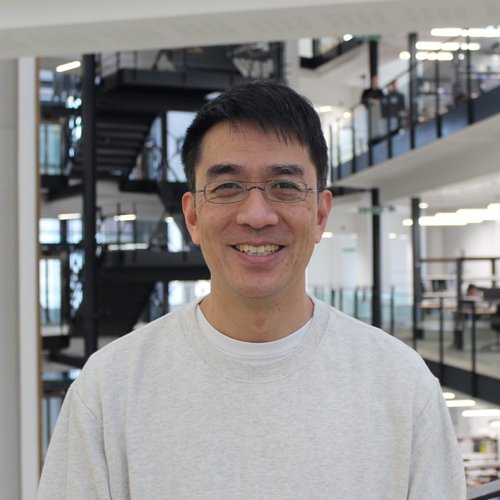
I am a postdoctoral research associate in a synthetic biology lab at the Manchester Institute of Biotechnology. One of my main projects is being written in C++, however none of my colleagues have expertise with it. Thus, the user group provides an environment where I can meet people who can support my work that no one in my workplace can.
How did you get into your domain?
I obtained my PhD in computer science over 20 years ago in data compression, with most of the software written in C (yes, it still compiles!). As a data compression program, a lot of the program involved bit shifting, bit masking, etc. Since then, I have moved into bioinformatics / computational biology, working as a researcher in Japan, Hong Kong, and now the United Kingdom. While I first started in so-called "dry labs", for the last 15 years, I have been embedded in "wet labs" where I might be the sole computer scientist in the research group. During this period, most of my work involved scripting languages like Python and R, even though C/C++ have always been my preferred languages.
What does your role in the user group involve?
I keep an eye on the discussions in the user group's Teams channel and post any information that I think would be of interest to others. I also encourage discussion and engagement within the community and encourage people to ask questions – everyone is welcome to post!
What would you like to see the user group doing over the next 12 months?
As a new user group, it would be good to see an increase in the number of participants in both the Teams channel and any in-person gatherings in the future. Other C++ related technologies that I use include the Boost libraries and CMake -- it would be great to find others in the university who use these tools. If you do please post in the channel and let me know.
What do you hope to come out the user group?
On the Internet, there are other similar communities for C++ developers -- including Reddit, cplusplus.com, and Stackoverflow. While I do follow them, I found them to be somewhat unfriendly. In this user group, everyone is very friendly and supportive of their colleagues and there is a good chance we will meet each other at a future in-person gathering! Hopefully, this makes the environment more friendly.
How can members of the user group support you / get involved?
Subscribe to the Teams channel and react to messages, bring questions, offer answers, and/or spread relevant C++ news whenever you can. When we have an in-person gathering, hopefully everyone can come along and introduce themselves. In other words, participate however much you can!
What do you enjoy most about the user group?
General discussions about C++ with others who have the same interest, as well as finding out about news, updates to the C++ language, or conferences and events relevant to working in Manchester. The user group allows me to meet others with a similar interest -- something that is absent among my colleagues.
Fun fact about your use of C++?
After diving back into C++ as my main programming language recently, I came across articles about standards such as C++20 and C++23. None of this made much sense to me until I looked at the history of the standards. I first learned C++ in 1994, before any standard existed (the first was in 1998). I then realised what a steep learning curve I have ahead of me. I need to learn to stop using C++ like it's still 1994!