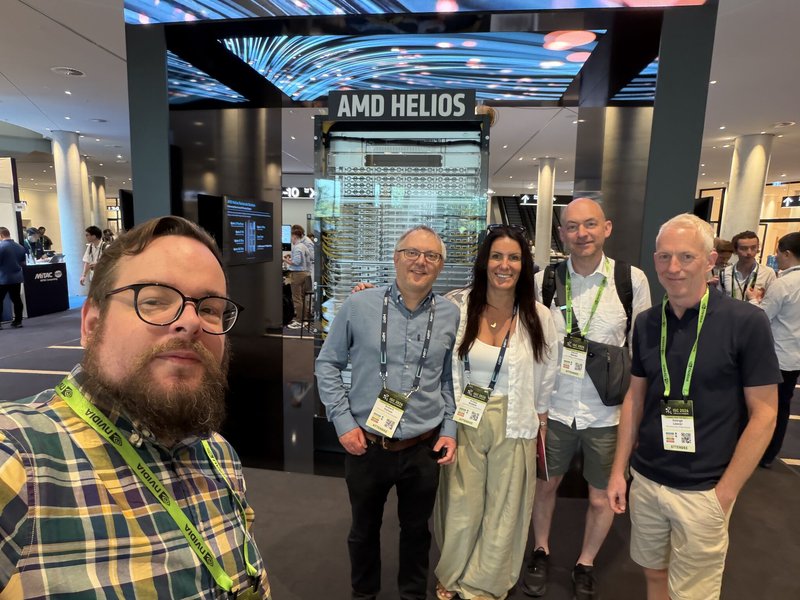

ISC High Performance 2026 showcased the latest advancements in high-performance computing, AI infrastructure, and next-generation supercomputing technologies. There is so much breadth in this domain: apart from CPU and GPU technology, there is all the essential supporting infrastructure such as advanced storage and networking; power and cooling for data centres; all the enabling software stacks for cluster management; and the scientific applications that are at the sharp end of cutting-edge research.
It was fantastic to connect with researchers, industry leaders, and innovators who are driving the future of computational science and technology. The scale of innovation on display highlighted just how quickly the landscape is evolving and the exciting opportunities this creates for research-intensive universities.
One of the key outcomes for us was exploring new ideas and approaches for the University's future HPC environment. We came away with valuable insights into how emerging technologies could enhance our research computing capabilities, as well as opportunities to partner with some vendors who are pushing the boundaries of performance, sustainability, and AI-enabled research.
A particular highlight was attending the opening keynote talk and the TOP500 Supercomputer Awards. It was inspiring to meet the teams from around the world responsible for designing, building, and operating the most powerful computing platforms on the planet. Their achievements demonstrate the incredible collaboration and expertise required to advance scientific discovery through supercomputing.
The keynote was themed around building heterogeneous systems to really push HPC onwards: we’re going to need lots of different technology in the mix to be able to run increasingly complex research workflows, using the right tools for the right jobs.
This goes beyond CPUs and GPUs, encompassing Quantum and Neuromorphic computing as just two examples. Manchester achievements in Neuromorphic computing were highlighted, which was a particular thrill given Research IT’s involvement in that work in the Human Brain Project, building and running the SpiNNaker machine.
Events like ISC are a reminder of the crucial role digital infrastructure plays in enabling research and innovation. We’ll be back next year as we look to get UoM back on the international supercomputing map!