
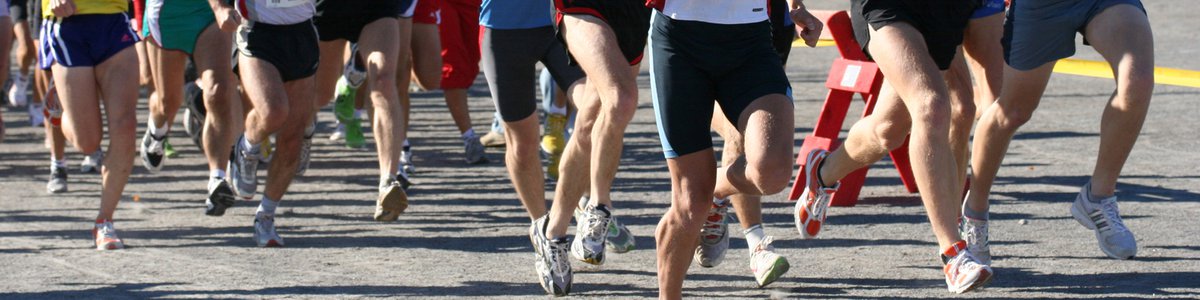
For many people a run is part of everyday life, but for many women it also involves making decisions such as which route feels safest, what time of day is best, is the path well lit and who else is around. Research by Dr Réka Solymosi in the Department of Criminology shows how significant this is:
In work exploring the abuse of women runners, 68% had experienced abuse, yet only 5% had reported it to the police. This highlights not only the scale of the problem, but also the significant fear and barriers that prevent formal reporting. The Safer Runners project was developed in response to these findings.
The app was one of several projects funded under the Research into Intervention, Safety and Empowerment (RISE) project whish, in turn, is hosted within SALIENT, a programme which brings University of Manchester academics together with partners from the universities of Bristol, Exeter, and Sussex.
The primary aim was to understand women runners’ perception of where and when they feel unsafe by collecting location-aware reports helping inform prevention, raise awareness and contribute to wider conversations about gender-based violence and public space. To do that they needed more than a survey. They needed a mobile app.
From research question to research software
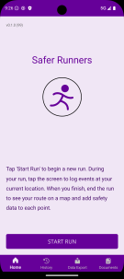
The RSE team worked with Dr Solymosi to build Safer Runners; a mobile app built for Android devices; for recording safety-related experiences during and after a run. The proof of concept project delivered the core essentials of being able to capture and store GPS co-ordinates when the user tapped the screen whilst the app was in use; logging this data on the phone itself; allowing the user to provide details on why they logged any events after the fact, and also to let them manually export selected data via email to the project team for analysis.
The central design principle was simple: never distract the runner at the wrong moment. If someone feels unsafe, the app shouldn't ask them to complete a form there and then, rather it should let them mark the moment quickly, keep moving and add details later. During a run the interaction is deliberately minimal: start the run, tap anywhere to log an event, then end the run. A large "Log Event" area with a visible timer and event count keeps the main action clear.
Afterwards, the runner reviews their route and logged events on a map, selects each event to add safety details and can drop new points in edit mode to mark something retrospectively. This reflects a key part of research software engineering, designing for the real context of use: outdoors, in motion, perhaps when the runner is already anxious.
Working collaboratively
The project was delivered through close collaboration. The researcher brought domain knowledge and clarity of aims; Research IT brought mobile development, design and delivery. Agile practices and GitHub Projects kept priorities transparent and gave the research team a clear view of progress, reducing the need for constant meetings. The researcher stayed involved in decisions while developers had the independence to keep moving between check-ins.
Dr Solymosi noted that feedback was "listened to and meaningfully incorporated", while the team also moved the project forward without needing input at every sprint. Good research software work is rarely about building a specification unchanged; it involves conversation, interpretation and constructive pushback, including decisions about what belonged in the MVP and what could wait.
Technical decisions with research value
The app used .NET MAUI as a route towards cross-platform development; targeting Android initially; with a local SQLite database for storage and location capture linking events to points on a route. A manual export mechanism was implemented to allow users to share collected data with the researchers in a structured way without introducing complex, remotely connected infrastructure too early.
The Safety Report form asks how safe the runner felt at a logged moment and what contributed to it, combining clear radio buttons with checkboxes for common reasons such as environmental cues, concerns about crime, or anti-social behaviour. Once details are saved, map markers turn green, giving immediate feedback on which reports are complete. Future phases could add REDCap integration, user registration, authentication and a Bluetooth event button but for now the priority was a working, testable, maintainable app.
Why it matters
Safer Runners shows why research software engineering matters: many research questions need bespoke tools, not because software is the focus, but because it makes the research possible. Here, the app captures situated, location-aware experiences that retrospective surveys struggle to record and lays a foundation for future development and user testing.
Reflecting on the collaboration, Dr Solymosi wrote that "without teams like yours, cutting-edge research simply wouldn't be possible." The work is not just about code: it's about understanding research aims, designing usable systems and helping researchers turn ideas into tools that support evidence, insight and change.
Future funding is currently being sought for a second phase of development.
Contact Us
If you are thinking about developing a mobile app yourself, or would like us to develop one for you, get in contact through our Connect form.