

In late 2025, the Research IT Platforms team collaborated with our integration partner Alces to expand the Computational Shared Facility (CSF) with four 8-way NVIDIA H200 HGX compute nodes and 230 TB of close, high-performance storage. All components are connected by high-speed local networking and integrate with our existing research data storage, scheduling and software offerings.
The whole process was completed without disruption to other CSF systems, ensuring that researchers using the CSF could continue their work uninterrupted.
Why Nvidia H200?
The H200 is an impressive chip, incorporating 141 GB of memory. It can hold much larger models in memory than our – still excellent – standard A100 80 GB And L40S 48 GB GPUs, allowing researchers to train bigger models more quickly, simulate in greater detail, and integrate Big Data into their computational and AI workflows.
The HGX platform is a baseboard from Nvidia, which connects 8x H200 GPUs on a high-speed interface, allowing multi-GPU processing with low overhead. The HGX board is paired with a Dell host server containing two 32-core high-performance CPUs and 1.5 TB of system memory. The resulting server weighs over 100 kg and can draw up to 11 KW of electricity.
What are the Benefits of H200?
Regardless of how expensive or powerful a chip may be, what really matters is the research it can support. Some of our early adopters were kind enough to share how the H200 accelerates their work.
Digital Twinning of Living Tissue
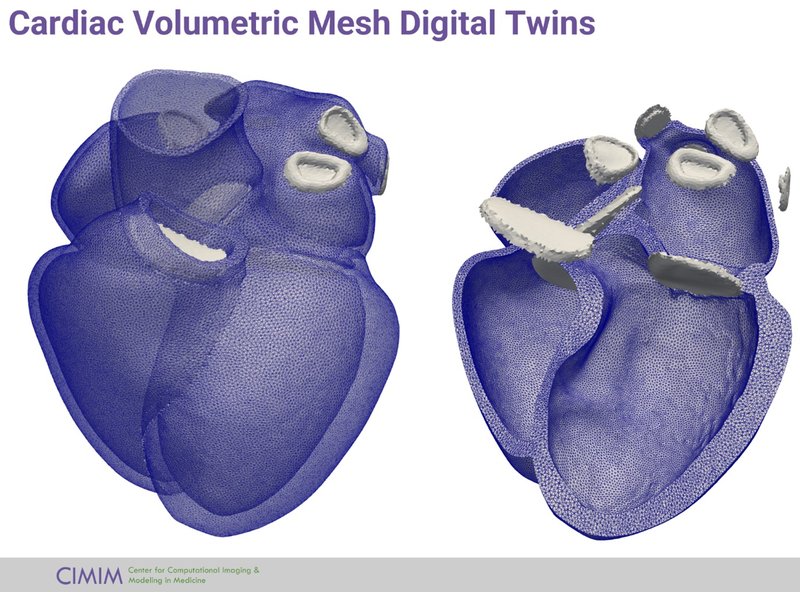
The digital twinning of living tissue – creating digital models of living organs or parts or organs – is a developing research area. Dr Fengming Lin (Centre for Computational Imaging & Modelling in Medicine, FBMH) is working on a cross-disciplinary study of diseases of the human heart and explained:
“We are developing a model to reconstruct high-fidelity, patient-specific heart structures directly from 3D cardiac imaging. These structures are detailed enough to allow simulations and though the speed of generation, enable large-cohort studies. The new H200 GPUs are transformative for us: they make it practical to work at very high resolution and to run far more experiments with more subjects in a reasonable time.”
Computational Fluid Dynamics
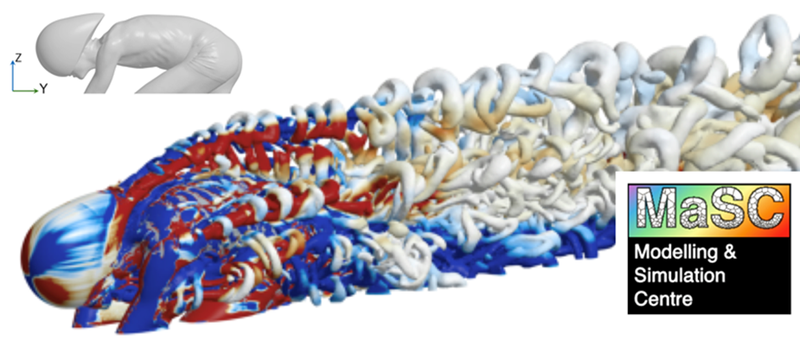
With their high calculation performance, H200 GPUs are well suited to computational fluid dynamic simulations. Prof. Alistair Revell (Dept. Mechanical and Aerospace Engineering) outlines the challenges:
“A key focus at MaSC is evaluation of aerodynamic performance, for example in competition cycling. The calculations present a formidable challenge both in terms of geometric complexity across a range of scales and the transitional flow regime of the typical air speeds involved. The new H200 hardware is pretty much the best available and enables a step-change in what and how much we will be able to simulate.”
Large Datasets
Another area where high performance GPUs can contribute is complex analysis of very large datasets where data must be held in memory, as Jinghan Huang (Dept. Computer Science) describes:
“The availability of up to 8-GPU parallelisation further enables multi-modal diffusion modelling, integrating geometric, imaging, and potentially clinical metadata from sources such as the UK Biobank cardiac dataset, which includes over 100,000 subjects.”
Large Language Models
Large Language Models are the well-known face of AI, but for research, generic, commercially oriented models often fall short. More focussed models are built, trained or retrained to optimise for a specific research question. Dr Mingfei Sun (Dept. Computer Science) explains how the new hardware helps:
“The CSF3 cluster H200 capacity has enabled us to accomplish our goals without having to use multiple GPUs to mitigate memory limitations. This has unlocked entire new directions for research that involves larger models closer to the state of the art, whether large language models or visual models for control.”
Further Information
For more information and how to access the system visit the dedicated H200 GPU page of the CSF website.