
The Research Software Engineering (RSE) department first introduced Agile methods internally in 2023–2024 to help RSEs manage projects more effectively through lightweight Scrum practices, improving the planning and delivery of complex research software projects. Following the successful completion of the Aurora Leadership programme, Adina Rahim set the vision for establishing the Agile Methods Working Group within the RSE department, with the aim of launching Agile learning pathways that expand beyond the RSE team.
With growing interest from colleagues outside the department, the new courses now support both technical and non-technical dRTP (digital research technical professional) roles. The initiative enables dRTP teams both within professional services and across research disciplines to adopt Agile practices, strengthen collaboration, and develop leadership and project management capability.
The Birth of the Agile Methods Working Group
In June 2025, the RSE department launched the Agile Methods Working Group, bringing together five volunteers from the RSE Department. Adina led the group, coordinating the course redesign, shaping the learning structure, and ensuring the initiative remained practical and relevant for all dRTP roles. So what has the working group achieved so far?
1. Restructured the Training on Offer
- Agile Fundamentals Course – A newly designed one-day, standalone introduction to Agile course, with a focus on Scrum. A practical course for both technical and non-technical dRTP roles.
- GitHub Tooling for Agile Course (Scrum-focused) – Redesigned from the original two-day “Agile Methods for RSEs” course into a one-day practical course focused on learning Agile project management using GitHub. Again, this course is open not only to software developers but also to other dRTPs who want to use, or are already using, GitHub as a project management tool.
2. Developed Hands-On, Interactive Learning
The courses incorporate creative, interactive methods to help participants learn by doing.
Course 1: Agile Fundamentals
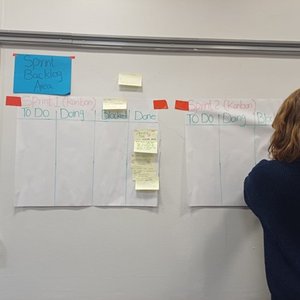
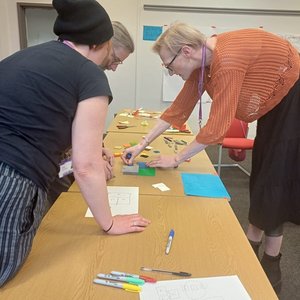
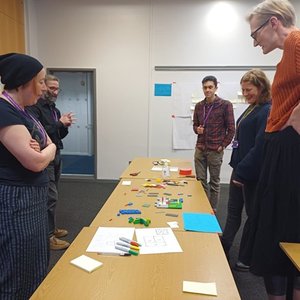
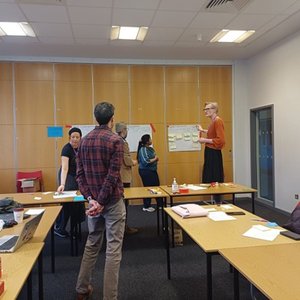
- In-person: LEGO and physical tools (sticky notes, pens, flipcharts) are used to simulate Scrum workflows and practise ceremonies and artefacts.
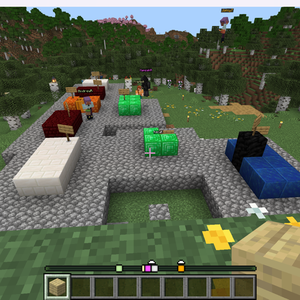
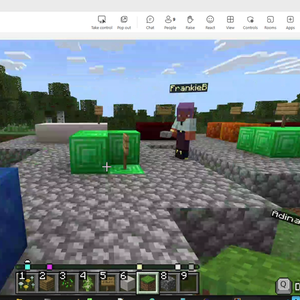
- Online: Minecraft and Miro are used to simulate the same workflows and practices in a virtual environment.
Course 2: GitHub Tooling for Agile
- Designed to be highly collaborative, introducing projects such as multi-cultural recipe writing. Teams coordinate, plan, and track tasks together, simulating real-world project management in a fun and engaging way.
- Participants learn how to apply Agile practices using GitHub while developing collaboration, communication, and coordination skills — making the learning practical for both technical and non-technical teams.
These hands-on, gamified exercises make Agile concepts memorable and practical, helping participants to build confidence, develop leadership skills, and apply Agile practices directly within their own teams.
3. Tool-Agnostic Design for Agile Fundamentals Course
The Agile Fundamentals course is designed to be tool-agnostic. During the workshop, participants use Post-its in person and Miro boards online to practice Agile workflows and ceremonies. However, the course notes and exercises are not tied to any specific software, so after the course, participants can apply the same Agile principles using any tool their team prefers, such as GitLab, Jira, Trello, or others. This ensures that the skills learned are fully transferable across different environments.
4. Improved Accessibility
- We have made the GitHub Tooling course suitable for teams with little or no software development experience.
- We have designed both courses to be available in online and in-person formats, ensuring wider accessibility and participation.
5. Created a Clear Learning Pathway
Participants start with ‘Agile Fundamentals’ and then progress to ‘GitHub Tooling for Agile’, building confidence and practical skills step by step.
This new structure ensures that everyone — from complete beginners to experienced project leads — can develop practical Agile knowledge through a clear and structured progression route.
Dry Runs for Agile Fundamentals Course
Before the official launch, the Working Group conducted 2 dry runs of the newly designed ‘Agile Fundamentals’ course. The in-person session was held on 29th January, followed by an online session on 3rd February. Thirteen participants from across the RSE department and ITS took part, adopting Scrum roles including Scrum Master, Product Owner, and Developer (LEGO and Minecraft builders).
Following the dry runs, the Working Group is now preparing the courses for official launch, incorporating participant feedback and refining exercises to ensure they are ready for a wider audience.
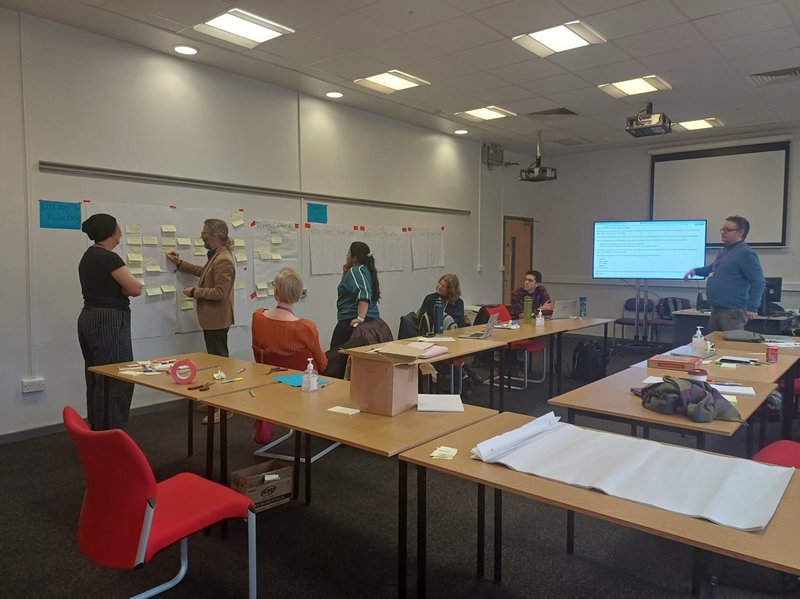
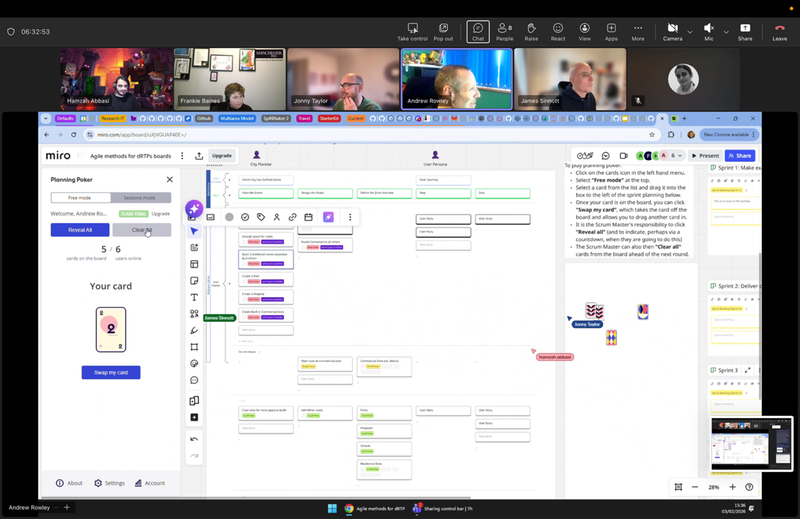
I would like to thank all participants who attended the dry-run sessions and provided valuable feedback, which has been instrumental in preparing for the official launch. Special thanks to Agile Methods Working Group members Ann Gledson and Andrew Gait for co-facilitating both sessions, and Chandima Samarakoon for participating. I truly appreciate the dedication of my group members for their active involvement and for volunteering their time to contribute to the Working Group’s activities.
Get Involved
If your team currently struggles with shifting priorities, unclear coordination, or delayed project delivery, adopting Agile practices can help you:
- Plan and execute projects more efficiently, meeting deadlines and stakeholder expectations
- Collaborate smoothly and communicate clearly, reducing bottlenecks and misunderstandings
- Build Agile leadership and project management skills that increase team confidence and ownership
- Deliver value more frequently to your “customers” — whether research collaborators, funders, or end-users
Agile project management training can help your team shift from reactive, fragmented workflows to structured, flexible ways of working — enabling faster delivery, smoother collaboration, and real impact.
Hear from our RSEs and stakeholders: See how Agile ways of working have helped our team collaborate more effectively, stay focused, and deliver real impact.
Note: Stay tuned for more updates on the final course launch and upcoming free Agile Project Management training opportunities. We’ll be sharing more details soon!
If you want to:
- Learn more about our Agile courses
- Explore how you can adopt Agile ways of working in your team
- Run a workshop for your team or research group
Feel free to reach out to Adina Rahim for more information and to discuss training opportunities.